Microsoft Build 2026: What You Need to Know

Last year's Build was full of demos showing that you could get an AI agent to do something impressive in a sandbox. This year focused on a harder question: how do you put agents into the actual business, grounded in what your company knows, without handing IT a security and governance problem they can't manage?
That shift runs underneath almost every announcement last week. Two questions sit at the center of it: How does an agent get your organization's context, and how do you let teams deploy agents without losing control of identity, security, and cost? If you read the news with those two questions in mind, everything gets a lot easier to process.
Here are my main takeaways from the week.
Build 2026 Session Playlists:
- Cloud platform & data
- Agents & apps
- Developer tools & frameworks
- Responsible AI
- Working with models
- Windows
Your Company's Context Becomes the Thing That Matters
For the last two years, the conversation about AI has mostly been about which model is best. I think that conversation is close to over. Models are becoming a commodity, and most organizations will use at least a handful for different use cases. The thing that separates a useful agent from a generic one is whether it understands how your business works.


That's what Microsoft IQ is for, and it went generally available last week. It pulls together four context layers your agents can draw on:
- Work IQ captures how work actually happens across Microsoft 365: the people, emails, documents, meetings, and the connections between them.
- Fabric IQ provides the shared meaning over your structured business data, the relationships and rules that turn a number into a decision.
- Foundry IQ ties those together and lets an agent reason across your internal knowledge and the live web.
- Web IQ handles fast, current grounding from the open web.
The implication of this for a business leader is straightforward. An agent that knows "this account is 14 days past due" is somewhat useful. An agent that knows the account is past due, that the renewal is in 30 days, that the customer opened three support tickets last month, and who on your team owns the relationship, is doing something closer to real work. Context is what gets you from the first agent to the second, and Microsoft is now treating it as core infrastructure rather than something each team rebuilds on its own.
If you take one thing away from Build, take this: The organizations that win with agents over the next two years will be the ones whose knowledge is connected and governed, not the ones with the most expensive model.
How You Say Yes to Agents Without Losing Control
The reason a lot of agent projects stall is not technical. It's that security and compliance teams have no way to see what an agent is doing, who it's acting as, or what it's allowed to touch. For those reasons, projects often stall or fail to launch.
Microsoft spent a lot of time at Build addressing exactly that. Agent 365 now extends Entra, Defender, and Purview into a single control plane for agents, so you can observe, govern, and secure them no matter what framework they're built on or where they run. Every agent gets its own governed identity rather than hiding behind a shared service account, which means the work it does is traceable to a known actor your directory already understands.
Around that, Microsoft is publishing open standards for agent trust, including a specification for defining what an agent is permitted to do in production and a policy-driven way to test agent behavior before it ships. There's also a new security system, MDASH, that uses a swarm of agents to find exploitable bugs and deliver fixes inside the Defender portal.
The capability to build agents has been ahead of the capability to govern them for a while now. Last week closed a good part of that gap. It's worth making sure your security leadership knows these controls exist, because these new tools give them a reason to revisit their approach to AI projects.
Building Agents Is Becoming a Real Platform
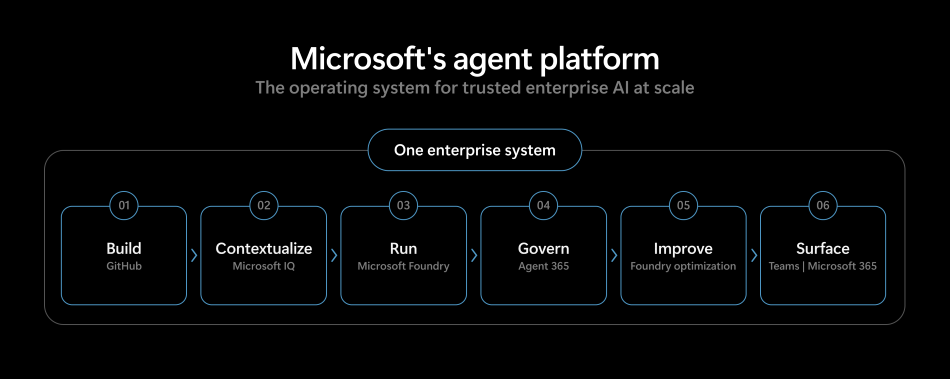
If your teams are past the experiment stage, the Microsoft Foundry updates matter. The pattern Microsoft is recommending is to build the agent in GitHub, get context from Microsoft IQ, deploy it to Foundry, govern with Agent 365, and improve it from real usage over time.
Hosted agents now run in isolated, per-session sandboxes with fast startup and no idle cost, which is the kind of unglamorous plumbing that makes projects easier to get into and run in production. The underlying Microsoft Agent Framework hit version 1.0, and notably it can host agents built with other vendors' tools, including the Claude and GitHub Copilot SDKs, inside the same workflow.
 Nick Brady
Two related items are worth flagging for the budget and strategy conversation. First, model choice is now real. Microsoft released its own family of in-house MAI models tuned for cost efficiency, and it also made third-party model providers available through the same Foundry endpoint with Azure governance applied. You are not locked into one model, and you can route the right model to the right job. Second, Frontier Tuning lets you train a model on your own data and workflows inside your compliance boundary, so the model learns your terminology and processes rather than staying generic. It's in early preview, so I'd keep an eye on it for now, but the direction is the one most enterprises have been asking for.


Agents That Act Before You Ask

Most of what we call AI at work still waits for someone to type a prompt. Microsoft Scout is Microsoft's first attempt at something different: an always-on agent that runs in the background, understands how you work through Work IQ, and handles routine things like meeting prep and scheduling without being asked each time. It lives in the tools people already use, like Teams and Outlook, and it operates under its own governed identity with admin policy controls.
This one is early. It's limited to Frontier customers through an experimental release for now, and it requires real setup before anyone can touch it. It's worth playing around with if you have the ability to, and I do think you should understand the cap
The move from agents that respond to agents that act on their own is the direction the whole platform is heading, and the governance questions it raises are the ones your organization will be answering within the year.
A Few Things for Your Builders
Several announcements are more technical but will land on your teams' plates, so they're worth knowing by name.
The GitHub Copilot app brings agentic development into a dedicated desktop experience where a developer can run several agent sessions at once and keep changes moving through review and merge. It widens who on your team can work this way.
GPU-accelerated Fabric Data Warehouse is the rare announcement that's both technical and immediately practical. Eligible queries can now run on NVIDIA hardware with nothing to rewrite and no infrastructure to stand up. Microsoft's internal benchmarks showed queries running up to seven times faster, and an early health-system customer reported a fivefold speedup on existing workloads. If your teams run heavy reporting on Fabric, this is close to free performance.
Azure HorizonDB is a managed PostgreSQL service built for the new class of AI-driven apps, with built-in vector search and roughly three times the throughput of self-managed Postgres. If you're familiar with Azure SQL Hyperscale, HorizonDB is similar in architecture and scalability, but for PostgreSQL instead of SQL Server.
Project Rayfin tackles the slow part of shipping an app, generating the backend (database, auth, storage, access policies) and deploying it onto Fabric under your existing governance.
On the Windows side, Microsoft is turning the OS into a place where agents can run locally inside sandboxes the operating system enforces, with IT keeping visibility across devices and the cloud.
The Takeaway
Build 2026 was less about any single product and more about a posture. Microsoft is betting that the next phase of AI value comes from agents that are grounded in your specific business, governed the same way your other systems are, and able to act rather than just answer. The pieces to make that real (the context layer, the security control plane, the production platform) all moved forward last week at the same time, which is the part that should get your attention.
The companies that can these new capabilities to accelerate their AI roadmaps are the ones who will get the most out of the next two years.
On Attending Build 2026 In-Person
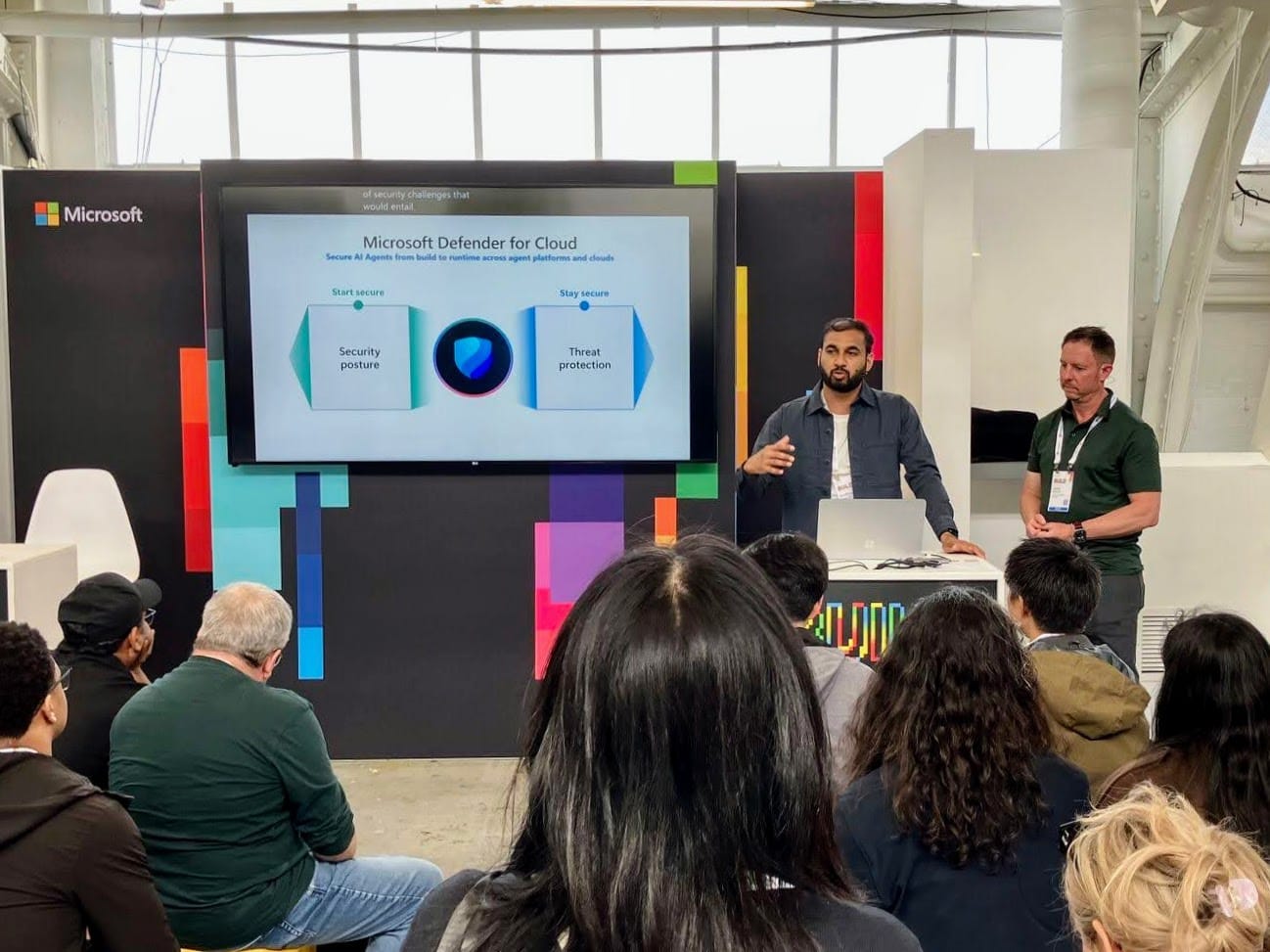
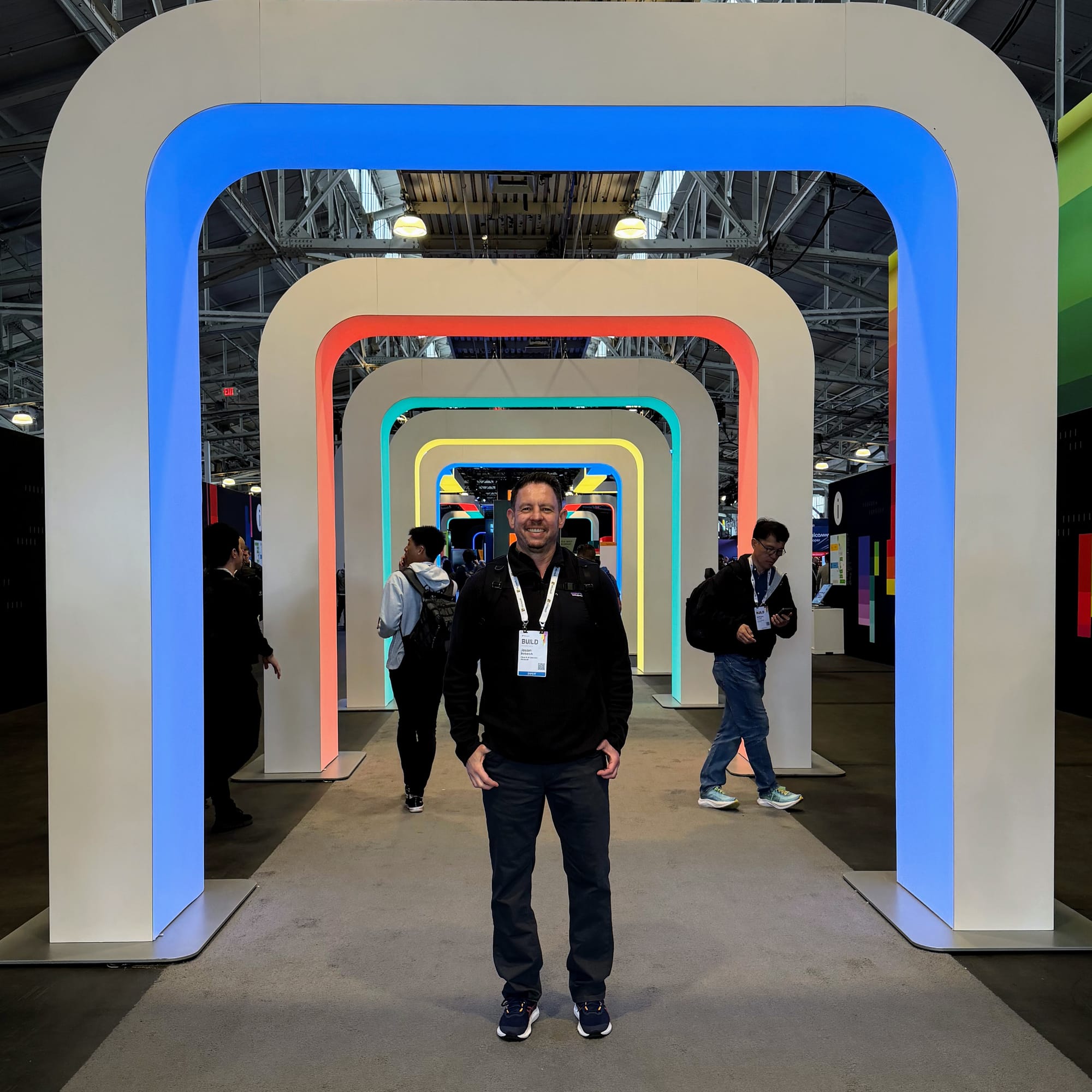
For the first time, I not only had the opportunity to attend Microsoft Build in-person, but to co-present a session with one of my teammates and share my knowledge at the Expert Meetup.
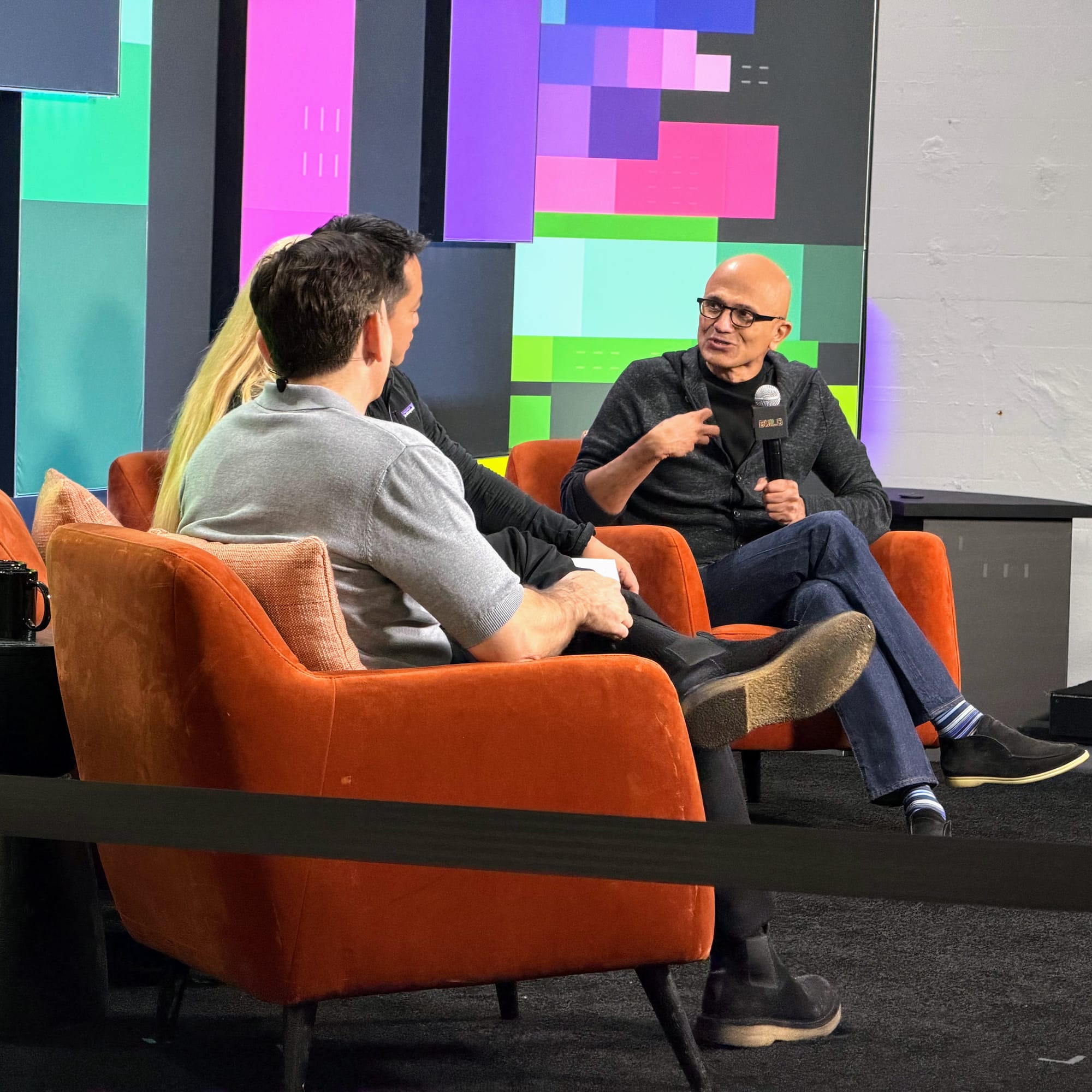
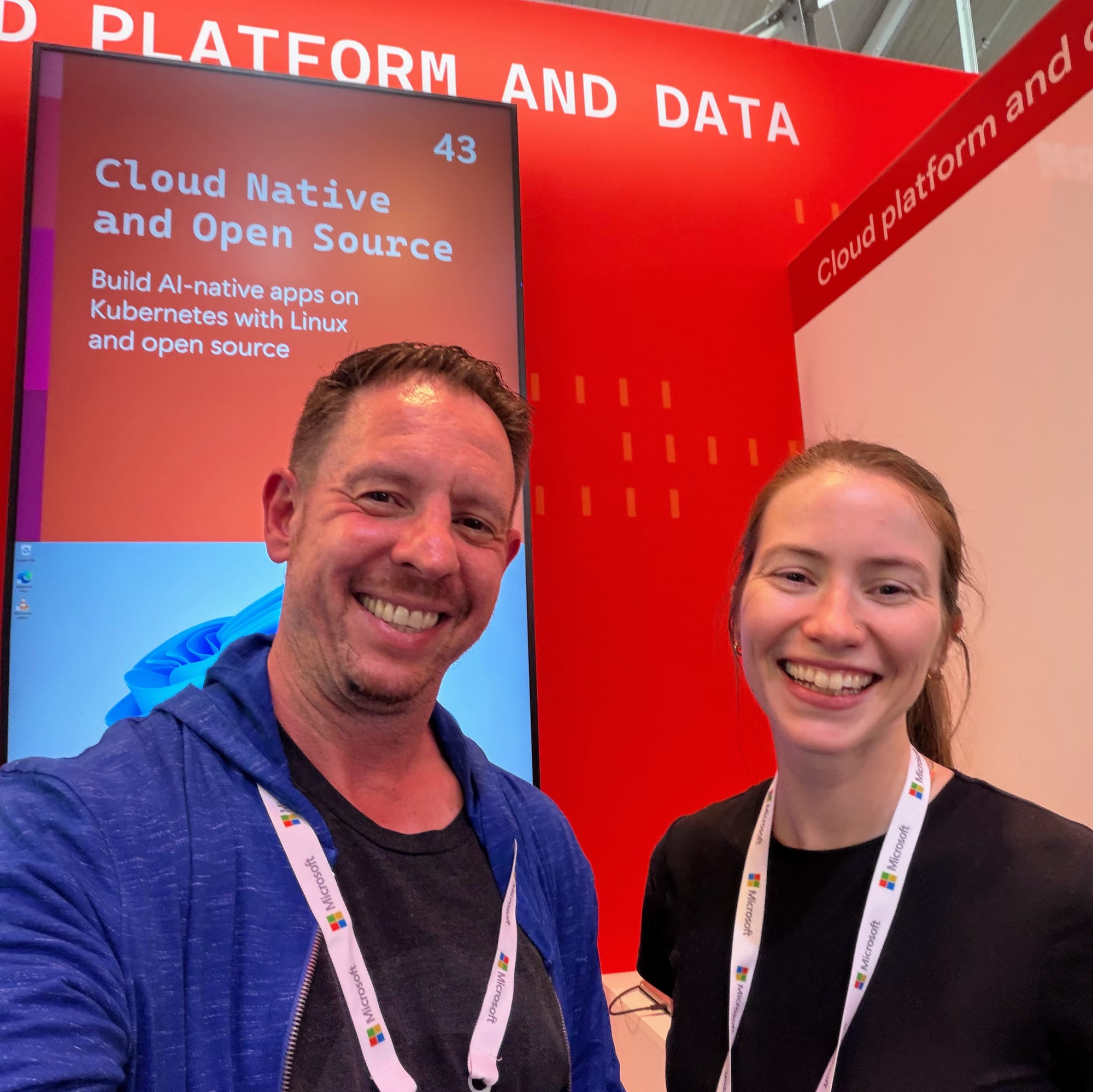
Held at the Fort Mason Center for Arts & Culture, the venue offered the chance for small, focused sessions, hands-on labs, and lots of interaction between attendees and Microsoft employees.
I loved the format and hope they continue with it for future Build conferences.