SQLCon + FabCon Europe 2026: What You Need to Know

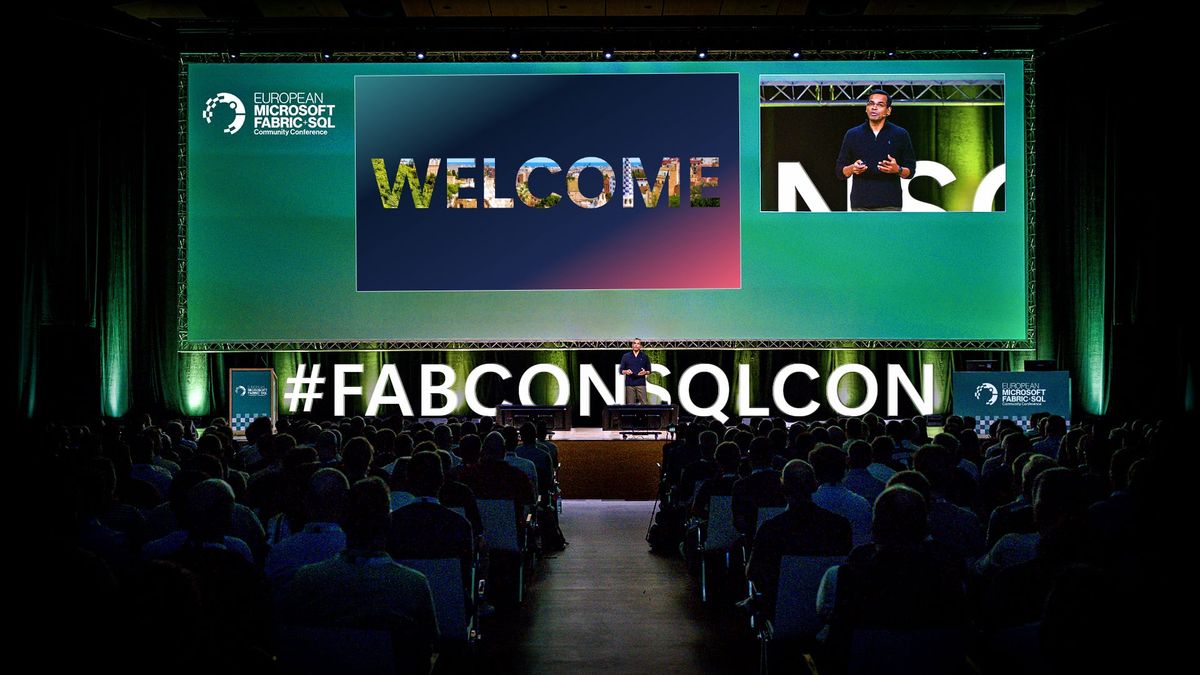
Back in March, the story at FabCon/SQLCon was that the people who run databases and the people who build analytics were finally in the same room. This week, nearly 5,000 data professionals gathered in Barcelona for the first European SQLCon alongside FabCon, and Microsoft pushed that story a step further. Fabric is becoming the context layer for AI: the place where your agents learn what your business data actually means.
That ties directly to what we heard at Build. Microsoft IQ is the context layer for agents across Microsoft, and Fabric IQ is the piece that covers your structured business data. Most of this week's announcements are about making that piece easier to adopt, cheaper to run, and safer to govern.
Here are my big takeaways from the announcements this week.
SQLCon + FabCon Europe 2026 Announcement Posts:
- FabCon and SQLCon 2026 Barcelona: Building the data foundation for Microsoft Copilot and agents
- New Microsoft data innovations unlock what only your business knows
- What's new across Microsoft SQL at SQLCon/FabCon Europe 2026
- Power BI's next chapter: The evolution of business intelligence
- Trusted AI starts with Microsoft Fabric, Real-Time Intelligence, and IQ
- Fabric September 2026 Feature Summary
Your Power BI Investment Is Now Your AI Strategy
Most organizations have spent the better part of a decade building Power BI semantic models. Those models hold the agreed-upon definitions of revenue, margin, headcount, and every other number leadership cares about. The question for the last year has been how to get AI agents to use those same definitions instead of inventing their own.
Fabric IQ in Microsoft Copilot Chat and Cowork is now generally available. People can ask business questions in Copilot and get answers grounded in the governed Power BI data their organization already trusts, and Microsoft isn't charging additional AI token costs for it. The Fabric IQ MCP server also reached general availability, so agents built outside of Copilot can draw on the same business context.
The practical value shows up when Fabric IQ and Work IQ work together. Copilot can pull the numbers from your governed reports, then add the organizational context around them: the related conversations, who owns what, and which decisions are still open. Cowork can take that a step further and turn it into real work, like preparing a review deck or pulling the right stakeholders into a meeting, with the figures still traceable to the source report.
The principle underneath all of this is simple: your dashboards and your agents should never use different definitions of the same number. Every data vendor is saying some version of that right now. The advantage for Microsoft customers is that those definitions already exist in the semantic models people use every day.
For organizations that need to go further, Fabric Ontology picked up a long list of generally available capabilities, including bringing Power BI DAX measures directly into an ontology, type hierarchies and inheritance, natural-language business rules, namespaces for organizing domains, built-in versioning, RDF/OWL import and export, and the ability to build and query ontologies conversationally.
My guidance: start with semantic models, since they're mature and already in use. Move to an ontology when you need agents to reason across several semantic models, real-time data, and business rules at once.
Power BI Becomes an App Platform
The Power BI announcement that stood out most to me is a new agentic app creation experience in Power BI Desktop. You describe what you need in natural language, and it generates a purpose-built data application from your semantic models that you can preview, edit, and publish. These apps can do more than display data. They support inputs, data write-back, shared state, and operational workflows. It arrives in preview in the coming weeks for Power BI Pro, Premium Per User, and Fabric capacity customers.
Under the hood, those apps run on Fabric apps, which come with a SQL database, authentication, and security built in.
The part that matters for budget conversations: Microsoft is including this at no additional cost for Power BI Pro and Premium Per User customers, with up to 1 GB per app. For a lot of organizations, the line between "a report" and "a lightweight business app" is about to disappear, and the people who build reports today will be able to build both.
Microsoft also gave an early look at semantic views, which define governed business metrics directly where the data lives in OneLake, and reaffirmed its support for Apache Ossie, an open effort with Snowflake to make semantic layers portable across platforms.
Sovereignty Without Giving Up the Cloud
Data sovereignty is top of mind in Europe right now, and it's becoming a bigger conversation everywhere else too. Plenty of organizations want the Azure operating model but need physical control of their infrastructure, either for regulatory reasons or as a contingency if the rules change.
SQL Server on Azure Local is now generally available. You run the data plane in your own data center and manage it through the Azure control plane. For environments that can't connect to the cloud at all, disconnected operations support a fully air-gapped deployment.
If your organization has held back on modernizing SQL Server because of residency, latency, or regulatory concerns, this removes a lot of those objections. Along the same lines, Microsoft Fabric is also expanding to GCC High for US government and defense customers.
Azure SQL Hyperscale Gets Cheaper to Run
Hyperscale has quietly become one of the strongest options for running SQL in the cloud. It separates storage and compute so each scales on its own, supports databases up to 128 TB, and lets you add read replicas as demand grows. It's also priced without the SQL Server license cost baked in, which puts it much closer to open-source-based databases on price.
This week's SQL updates focused on cost and scale:
- Serverless auto-pause is in preview. When a database sits idle, it pauses and you stop paying for compute. For dev, test, and intermittent workloads, that makes Hyperscale a true pay-for-what-you-use database.
- Higher-density elastic pools (preview) now hold up to 50 databases and 128 TB per pool, so databases share throughput instead of each paying separately.
- 160 and 192 vCore compute sizes are now generally available.
- A new migration path into Hyperscale through Azure Arc is in preview.
Across Azure SQL Database, SQL Managed Instance, and SQL database in Fabric, DiskANN vector indexes reached general availability. That lets developers combine traditional T-SQL queries with high-performance semantic search in the same database, which is the foundation for most retrieval-augmented AI apps. Automatic index compaction is also now GA, which cleans up index bloat without anyone scheduling a maintenance window.
One Place to Manage Your Entire Database Estate
When I covered the Database Hub back in March, it was the headline feature for database teams. Database Hub in Fabric is now in public preview. It gives a single view of health, performance, and security across SQL Server, Azure SQL, PostgreSQL, Azure Cosmos DB, and SQL databases in Fabric, whether those databases run on-premises or in the cloud.
The bigger news is database agents for SQL and PostgreSQL, also in preview and surfaced through the Database Hub. These are specialist agents that investigate issues across your estate, diagnose the cause, and recommend optimizations.
On the tooling side, GitHub Copilot agent mode in SSMS is now generally available. It handles multi-step work like tracing dependencies, analyzing execution plans, and generating DDL, right inside the tool most DBAs already live in. Put those together and the workflow gets much shorter: an agent flags the problem in the hub, and a DBA uses Copilot in SSMS to find the root cause and ship the fix.
For teams managing hundreds of databases with a small staff, where one unpatched instance is all an attacker needs, this is the kind of tooling that changes how the job gets done.
OneLake Keeps Pulling Data In, and Now Security Comes With It
OneLake's value comes from how much of your data it can reach without copying it, and this week added several sources worth knowing about:
- Salesforce Data Cloud 360 now has a bidirectional integration with OneLake in preview, so each platform can work with the other's data.
- Dynamics 365 Business Central gets deeper integration with Fabric.
- Google BigQuery mirroring and SharePoint list mirroring are generally available.
- Extended capabilities for mirroring reached general availability.
The announcement I'd highlight for governance teams is mirrored security roles for Snowflake, now in preview. When you mirror a Snowflake database into Fabric, its security roles can come along with the data, so users who couldn't see a table in Snowflake can't see it in Fabric either. That removes one of the biggest reasons governance teams hesitate to mirror data at all.
There's also a new way to share data across organizations. IQ sharing, in preview, lets you securely share governed tables and files with customers, partners, and other teams, along with the context that gives the data meaning, such as agent instructions and ontologies. The recipient works with it live, with no export, no pipeline, and no copy. Native sharing of Power BI semantic models and Fabric IQ ontologies is on the roadmap. Early adopters include EY, S&P Global, and TomTom, and any industry that depends on partner data should take a look.
Agents Start Doing the Data Work
A theme running through the whole week: people increasingly don't want to build and operate data systems by hand. They want to describe the outcome and let an agent do the work, with a human approving the parts that matter.
The new Fabric data engineering agent, now in preview, is the clearest example. It's built on technology from Microsoft's acquisition of Osmos earlier this year, and it's designed to autonomously execute long-running work like data migrations, lakehouse modernization, ETL, and data preparation.
Around that, Microsoft filled in the operational pieces:
- Observability in Fabric (preview) brings cross-workspace monitoring and an enhanced Monitor Hub into one view of what's running and what's failing.
- Operations agents can now perform root-cause analysis (generally available), and pre-approved actions (preview) let them take specific fixes on their own while keeping humans in control of everything else.
- Deployment plans (preview) give teams full control over how solutions move from dev to test to production.
- Policies in Fabric (preview) give admins centralized control over who can do what across the platform.
This is also where Fabric meets the tools developers already use. The Fabric Core MCP server is now generally available, and Fabric works with GitHub Copilot, VS Code, Codex, and Claude Code, so teams can build and manage Fabric from whichever agent they prefer.
Paying Only for What You Use
Listed as coming soon in the September feature summary, on-demand billing introduces a zero-provisioned F0 capacity in preview. Instead of paying for a reserved block of capacity whether you use it or not, you pay for what actually runs.
This is the Fabric equivalent of serverless. It's a good fit for spiky workloads, like a heavy processing job that runs one day a week, or for teams that only touch Fabric occasionally today. Steady, predictable workloads will likely still be cheaper on a provisioned F SKU, so treat this as another option to right-size spend. It also lowers the barrier to getting started: a team can try Fabric without anyone first having to size and commit to a capacity.
A Few Things for Your Builders
- Fabric Runtime 2.0 went generally available in August with Spark 4.1, Delta Lake 4.2, and Python 3.13, and it's becoming the default runtime for new workspaces this fall. If your teams haven't tested their notebooks on it yet, now's the time.
- SSMS picked up generally available SQL projects, Schema Compare, and a SQL formatter, and Microsoft SQL agent skills are in preview for teams building with coding agents.
- Real-Time Intelligence can now build Real-Time Dashboards from a Copilot description (preview), and ontologies can be used as a dashboard source.
- There's a new SQL AI developer certification for people building agentic and AI-enabled apps on SQL.
The Takeaway
March's FabCon was about bringing databases and analytics together. Barcelona was about what comes next: giving agents the same understanding of the business that your people have, using definitions you already trust.
Microsoft's bet is that the data platform conversation is shifting away from whose engine is cheapest and toward whose platform gives AI the right context. Price and performance still matter, and several of this week's announcements are squarely about cost. The strategic question is whether your agents, your reports, and your people are all working from the same version of the truth.
If your organization runs on Power BI, you're closer to that than you might think. Your semantic models are already there.
What's Next
The next big stop is Microsoft Ignite, November 17–20 in San Francisco. I'd expect several of this week's previews to show up there with updated timelines, so it's worth keeping an eye on the Fabric roadmap between now and then.